 ultimate-guide
Video Production for Business: A 2026 Guide
Table of Contents
- What Video Production Means for a Business
- The Three Stages of Video Production
- Corporate Video Production Costs: What Drives the Price
- The Ideal Promotional Video Length for Websites, Ads and Social
- Promotional Video Script Templates You Can Adapt
- AI Video Production Tools and the Human Role
- How to Choose a Video Production Partner
- Frequently Asked Questions
Last Updated: 10 September 2026
What Video Production Means for a Business
Video production is the complete process of planning, capturing or generating, and editing moving content into a finished asset a business can publish. For most companies, it is no longer a nice-to-have: it is the format that carries a website, an ad campaign and a social feed at the same time. This guide from Apex Video Promotions covers how the process works in 2026, what drives cost, and how to brief a partner without wasting weeks.
The old model assumed a film crew, a location and a shoot day. That assumption is collapsing. Generative tools now handle much of what a camera used to do, which changes who can afford professional video production and how fast it can be delivered.
Most guides still describe video production as if every project needs a crew. It doesn't.
The Three Stages of Video Production
Every project, from a ten-second social clip to a full brand film, moves through three stages. Skipping or rushing any one of them shows up in the final cut.
- Pre-production: planning, scripting, storyboarding and approving the concept
- Production: filming on location or generating the footage with AI tools
- Post-production: editing, sound, colour, captions and delivery in the right formats
The balance between stages has shifted. AI-assisted workflows compress production dramatically, but pre-production still decides whether the video works.
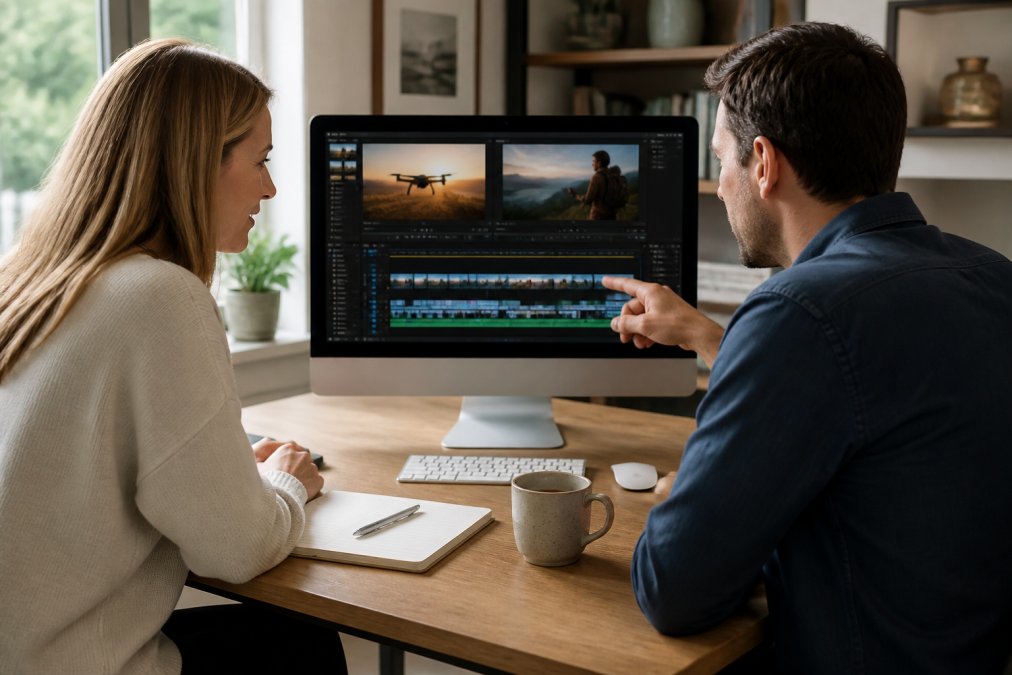
Pre-Production: Planning Before Anything Is Made
Pre-production is where the message gets decided: the objective, the audience, the script and the visual approach. It is the cheapest stage to change and the most expensive to skip. A clear brief here prevents reshoots, rewrites and awkward conversations later.
Production: Filming or Generating the Footage
Production is the capture stage. Traditional projects book a crew, a location and talent. AI-powered production generates footage, imagery and voice from a script and brand assets instead. The output is a set of usable clips ready for assembly.
Post-Production: Editing, Sound and Delivery
Post-production turns raw material into a finished video. Editing sets the pace, sound design carries the mood, and captions keep viewers watching without audio. Delivery matters too: a 16:9 cut for the website, a 9:16 cut for social, and the right file sizes for each platform.
Corporate Video Production Costs: What Drives the Price
Corporate video production costs depend on four things: length, complexity, how much footage must be created from scratch, and turnaround time. A short, scripted promotional video built from existing brand assets costs far less than a multi-location shoot with actors and original music.
Pricing varies widely between providers, so treat any single figure with suspicion. Ask what is included before comparing quotes:
| Cost Driver | What It Means | Impact on Price |
|---|---|---|
| Video length | Final runtime and number of cut-downs | Longer and more versions cost more |
| Complexity | Animation, motion graphics, voiceover | Higher complexity, higher cost |
| Footage source | Filmed on location vs AI-generated | Filming adds crew and location costs |
| Number of revisions | Rounds of changes after first cut | Extra rounds add time and cost |
| Turnaround | Standard schedule vs rush delivery | Faster delivery usually costs more |
A common mistake is comparing quotes on headline price alone. Two quotes for "a promotional video" can describe completely different amounts of work.
The Ideal Promotional Video Length for Websites, Ads and Social
The ideal promotional video length is 60 to 90 seconds for a website homepage and 15 to 30 seconds for paid social (hubspot.com). Attention drops sharply after the first few seconds, so the opening must earn the rest of the watch (thinkwithgoogle.com).
Different placements need different cuts:
- Website homepage: 60-90 seconds to explain the offer and build trust
- Paid social ads: 15-30 seconds, hook in the first three seconds
- Product or service page: 30-60 seconds focused on one outcome
- Social organic: 15-45 seconds, captions on, sound off
One script rarely fits all four. Plan for multiple cut-downs from the same source footage rather than commissioning separate videos.
Promotional Video Script Templates You Can Adapt
A promotional video script follows a simple structure: hook, problem, solution, proof, call to action. Keep the whole thing under 150 words for a 60-second video, and read it aloud before you approve it (peer-reviewed research).
Here is a template you can adapt:
[HOOK, 0-5s] "Still [common customer frustration]?"
[PROBLEM, 5-15s] "Most [business type] make it harder than it needs to be. [One sentence on the pain.]"
[SOLUTION, 15-35s] "[Business name] [what you do] so you can [outcome]. [One specific detail that proves it.]"
[PROOF, 35-50s] "[Short customer result or credibility line.]"
[CTA, 50-60s] "Visit [website] to [specific next step]."
Read it aloud with a stopwatch. If it runs long, cut adjectives, not the call to action.
AI Video Production Tools and the Human Role
AI video production tools now handle footage generation, voiceover, music and rough cuts. What they do not handle is judgement: which message matters, which take is convincing, and whether the result actually sounds like your business.
The practical split looks like this. AI accelerates the repetitive work, generating variations and assembling first cuts in hours. Humans direct the creative: scripting, brand alignment, pacing and the final edit. A video with no human direction tends to look generic, which is exactly the objection most buyers raise before they start.
How to Choose a Video Production Partner
Choose a partner on process and proof, not on showreel alone. Ask how concepts are developed, what happens if you dislike the first idea, and how revisions are handled before you commit.
Use this checklist when comparing providers:
- Can they show work for a business like yours, not just big brands?
- Is the concept developed before you pay, or is payment upfront?
- How many revision rounds are included, and what do extra rounds cost?
- What is the realistic turnaround from brief to final file?
- Do you receive the files in every format you need?
- Who owns the final video and the source assets?
A practical test: ask each provider to describe their process in three sentences. The ones who can explain it clearly usually run it clearly too.
Frequently Asked Questions
What are the three main stages of video production?
Video production splits into pre-production, production and post-production. Pre-production covers the brief, script, storyboard and schedule. Production is where footage is captured or generated. Post-production is editing, colour, sound and delivery. With AI-led video production, the production stage becomes generation rather than filming, which removes the need for a shoot day and shortens the entire timeline, often to around two weeks from concept approval.
How can businesses reduce video production costs?
The biggest cost driver in corporate video production costs is filming: crew, location, talent and equipment hire. Removing the shoot removes most of that spend. Other ways to reduce cost include reusing existing website, product and brand assets, keeping the video short, and planning one master edit that can be cut into multiple social versions. AI-led production with human creative direction keeps the quality high while cutting the overhead that traditional shoots carry.
Is generative AI changing the video production industry?
Yes. AI video production tools now handle scripting support, voiceover, imagery and rough cuts, which shortens timelines and lowers the barrier to entry for smaller businesses. The human role shifts to creative direction, brand accuracy and marketing strategy rather than operating cameras. The result is that professional-looking promotional video is no longer reserved for companies with large production budgets, and turnaround times have dropped from weeks to days.
How do I choose the right video production partner for my business?
Ask three things: what happens before you commit, how revisions are handled, and how fast a concept can be delivered. A partner who offers no cost until concept approval lets you judge the creative direction before spending. Also check that the process fits your sector, not just e-commerce, and that you get a clear timeline in writing. Book a consultation and ask to see work produced for businesses similar to yours.
Choosing a video production partner comes down to speed, clarity and whether the process removes work from your plate or adds to it. At Apex Video Promotions, we combine AI-powered production with human creative direction, so there are no filming days or crews to organise, concepts arrive within 24 hours, and you pay nothing until you approve the concept. Get started with Apex Video Promotions and turn your website visitors into customers with video built for how they actually watch.