 comparison
Is Professional Video Production Worth the Cost?
Table of Contents
- The Real Question: Value Over Price
- DIY Video Production vs Professional: What You Actually Save
- Video Marketing Return on Investment: How to Measure It
- Business Promotional Video Examples That Justify the Spend
- Social Media Video Production: Where the Cost Really Goes
- Factors That Influence Professional Video Production Cost
- When Professional Video Production Is Worth the Cost (and When It Isn't)
- Conclusion
- Frequently Asked Questions
Last Updated: 20 October 2026
The Real Question: Value Over Price
Is professional video production worth the cost? For most businesses, yes, provided the video has a clear job to do. A promotional video that lifts website conversions or cuts sales friction pays for itself; a beautiful film with no purpose does not. This guide from Apex Video Promotions breaks down where the money goes, what you save by doing it yourself, and how to judge the return before you commit a penny.
The framing matters. Most buyers compare quotes and stop there. The better question is what the video must achieve to justify its price. A website video that converts a modest share of existing traffic can outperform a paid ad campaign costing far more each month.
Below, we show you exactly how to run that calculation for your own business.
DIY Video Production vs Professional: What You Actually Save
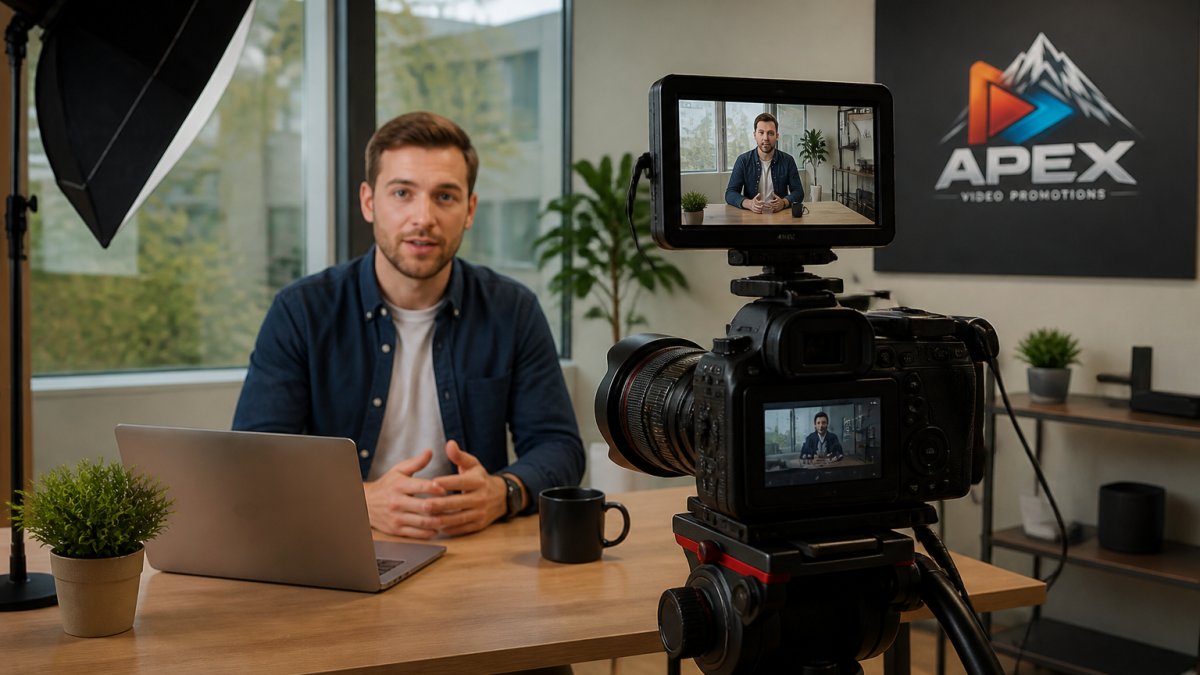
DIY video production vs professional is rarely a straight saving. Doing it yourself saves cash upfront, but it costs time, and time has a price. A founder spending two days scripting, filming and editing has lost two days of selling.
What you genuinely save with DIY:
- Production fees and crew day rates
- Agency project management overhead
- Travel and studio hire
What DIY quietly costs:
- Your own hours, often the most expensive in the business
- Retakes when lighting, sound or delivery falls short
- A finished video that looks homemade next to competitors
The honest comparison is not "free versus expensive". It is "cheap and slow versus paid and fast". For a one off internal clip, DIY wins. For a video that sits on your homepage for two years, the maths usually flips.
Video Marketing Return on Investment: How to Measure It
Video marketing return on investment is the revenue a video generates divided by what it cost to make and distribute. That is the whole formula. Everything else is guesswork dressed up as strategy.

To measure it properly, tag the video's landing page, track conversions from viewers, and compare against a control period. If your site gets steady traffic, a simple before and after comparison over four to six weeks tells you most of what you need.
Three signals worth watching:
- Conversion rate on pages that carry video versus pages that do not
- Time on page, which tends to rise when a video answers the visitor's first question
- Enquiry quality, since a well made video filters out poor fits before they call
For a broader view of how video fits a wider campaign, the Content Marketing Institute's research library publishes practical measurement frameworks worth reading.
Business Promotional Video Examples That Justify the Spend
Business promotional video examples that justify their cost share one trait: they do a specific job. A locksmith's homepage video that explains response times and shows a clean, professional van converts anxious callers. A consultant's 60 second explainer replaces a paragraph nobody reads.
The pattern repeats across sectors:
- Service businesses use short website videos to build trust fast
- Product businesses use demonstration clips to answer "how does it work"
- Agencies use case study videos to shorten the sales cycle
None of these need cinematic scale. They need clarity, pace and a clear next step. That is why Google's guidance on video and page experience keeps returning to relevance and load speed rather than polish for its own sake.
Social Media Video Production: Where the Cost Really Goes
Social media video production costs are driven by volume, not glamour. A single hero film is one project. Twelve platform ready cuts a month is a production line, and the line is where budgets quietly drain.
Most of the spend sits in:
- Scripting and concept work for each format
- Editing and versioning for different aspect ratios
- Captions, which most viewers now expect
- Refresh cycles, because social content dates quickly
This is the section where traditional production struggles. Crew days do not scale down to a weekly posting schedule. That gap is exactly where AI assisted production changes the economics, and it is why we built our AI video marketing service around fast, repeatable output rather than one off shoots.
Factors That Influence Professional Video Production Cost
Professional video production cost is set by scope, not by a single rate card. Two quotes that look wildly different usually reflect different briefs.
| Cost factor | What drives it | Where you can save |
|---|---|---|
| Concept and scripting | Number of rounds, research depth | Supply a tight brief upfront |
| Filming | Crew size, locations, shoot days | Remove locations entirely |
| Talent | Presenters, voice artists, licensing | Use existing staff or AI voice |
| Editing | Length, effects, versioning | Agree cutdowns in advance |
| Revisions | Rounds included in the contract | Fix the brief, not the edit |
| Turnaround | Deadline pressure | Plan further ahead |
The biggest lever is filming itself. Every shoot day pulls in crew, travel, kit and scheduling risk. Remove the shoot and the cost structure changes completely, which is the principle behind our affordable production approach.
For a neutral view of production standards, the British Film Institute's industry resources offers useful context on how professional crews are structured and why day rates sit where they do.
When Professional Video Production Is Worth the Cost (and When It Isn't)
Professional video production is worth the cost when the video has a measurable job, a long shelf life, and an audience already arriving. It is not worth it when the video is a vanity project with no distribution plan.
Worth it:
- A homepage video that converts existing traffic
- A sales asset used in every pitch for two years
- A product explainer that cuts support enquiries
Not worth it:
- A brand film with no placement strategy
- A one off social clip that will be forgotten in a fortnight
- Anything commissioned before you know what success looks like
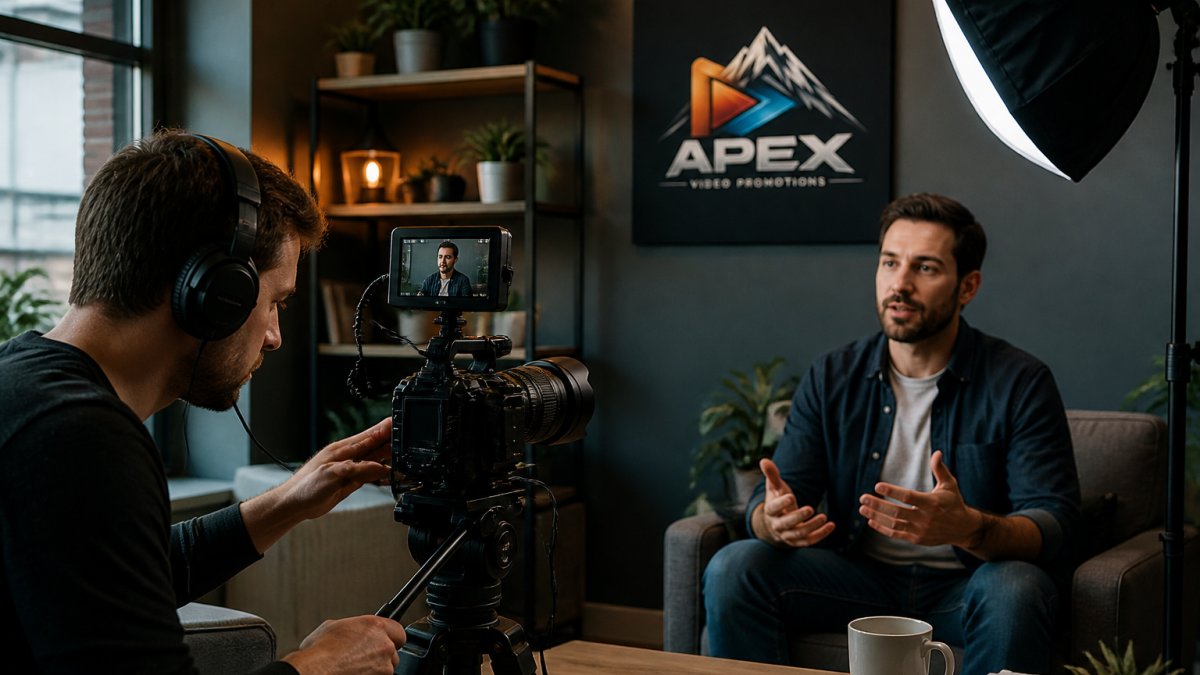
This is where the production model matters as much as the price. At Apex Video Promotions, we develop a concept within 24 hours and charge nothing until you approve it, so you can judge the creative before committing. Turnaround is roughly two weeks, with no filming days to schedule around.
Conclusion
The hard part is not choosing a production route. It is being honest about what your video needs to achieve and refusing to pay for anything that does not serve that goal. Most businesses overpay for polish and underinvest in purpose.
If you want professional output without crew days, shoot schedules or upfront risk, we can help. Apex Video Promotions combines AI powered production with human creative direction, delivers a concept within 24 hours, and charges nothing until you approve it. Get started with Apex Video Promotions and turn your website content into video that converts.
Frequently Asked Questions
Is professional video production worth the cost for a small business?
For most small businesses, yes, if the video is tied to a clear goal like increasing website conversions or social media engagement. Professional video production cost can be significant, but the return on investment often outweighs it when you factor in the time saved, the quality difference, and the higher engagement rates. DIY videos can work for quick updates, but a polished promotional video builds trust faster and can be reused across multiple channels for months or years.
How much does professional video production cost?
Professional video production cost varies widely based on length, complexity, and the production method. Traditional filming with a crew, actors, and locations can run into thousands of pounds. AI-powered production, like the services offered by Apex Video Promotions, is typically more affordable because it eliminates filming days and crew costs. For an accurate figure, request a quote based on your specific brief, as pricing depends on quantity, dates, and delivery requirements.
How can businesses measure the return on investment of video?
Track metrics that align with your goals: for website videos, look at conversion rate changes and time on page; for social media, monitor engagement, shares, and click-through rates. Use UTM tags to attribute traffic and sales to specific videos. Compare the cost of production against the incremental revenue or leads generated. A simple formula is (revenue from video - production cost) / production cost. Many businesses find that a single high-performing video pays for itself within weeks.
Is it cheaper to make videos in house or hire a professional?
In-house video production might seem cheaper upfront, but it often costs more in the long run when you account for staff time, equipment, software subscriptions, and the learning curve. Professional video production cost includes expertise, editing, and creative direction that can take years to master. For occasional, simple videos, DIY can work. For promotional content that needs to convert, hiring a professional usually delivers better results and saves your team's time for core business activities.