 comparison
Corporate Video Production: What to Expect in 2026
Table of Contents
- What Corporate Video Production Agencies Actually Do
- How to Choose a Video Production Company
- Corporate Video Length: Getting the Duration Right
- What to Include in Your Corporate Video Brief Template
- Corporate Video Examples That Actually Convert
- AI Versus Traditional Corporate Video Production
- Key Differences in Quality, Speed and Cost
- Frequently Asked Questions
Last Updated: 12 October 2026
What Corporate Video Production Agencies Actually Do
Corporate video production agencies transform business messages into engaging visual content. They handle everything from initial concept and scripting through final editing and delivery. At Apex Video Promotions, we work with UK businesses to create professional promotional videos that communicate clearly and drive conversions.
A corporate video production company typically manages multiple stages: strategy development, scriptwriting, video creation, voice over recording, editing, and quality assurance. The process involves understanding your business goals, identifying your target audience, and crafting a narrative that resonates with viewers.
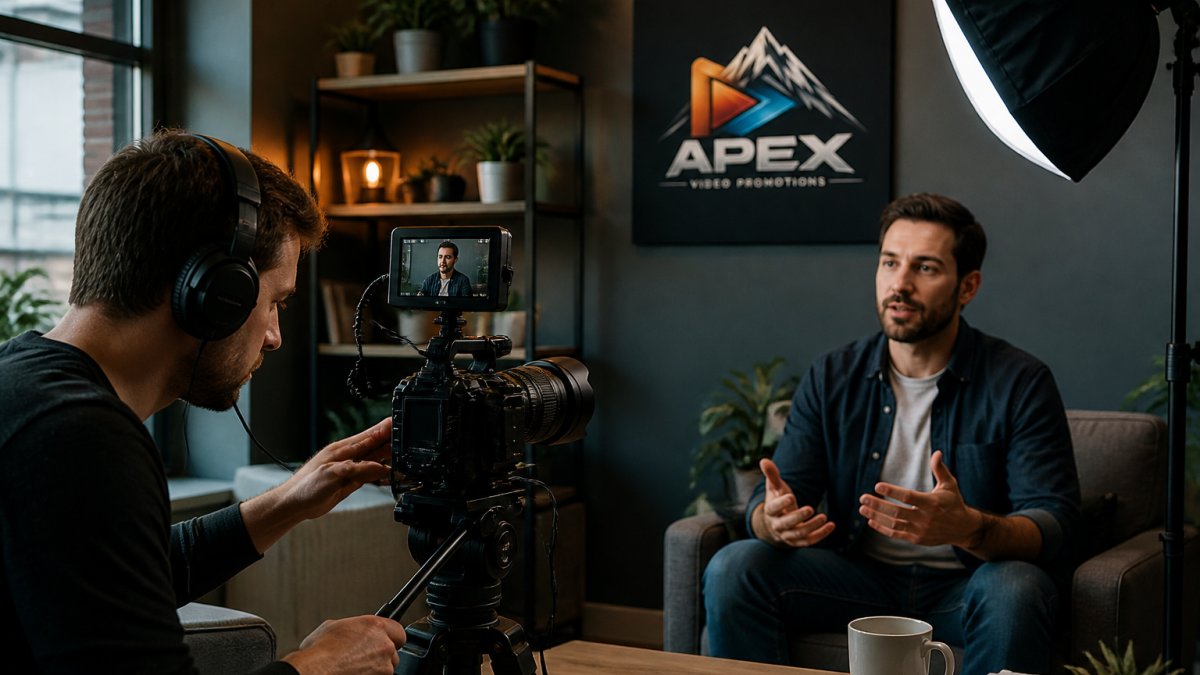
Traditional agencies coordinate filming schedules, manage camera crews, book locations, and handle post production work. This approach delivers quality results but involves significant time, cost, and logistical complexity. Modern alternatives now include AI powered production methods that compress timelines and reduce overhead whilst maintaining professional standards.

The core deliverable remains the same: a finished video that communicates your value proposition, showcases your products or services, and encourages viewers to take action. Whether produced through traditional filming or AI powered methods, the video must align with your brand voice and marketing objectives.
How to Choose a Video Production Company
Selecting the right video production partner depends on your timeline, budget, and creative requirements. Start by clarifying what success looks like for your business. Are you launching a new product? Building brand awareness? Driving website conversions? Your answer shapes which type of agency fits best.
Consider the company's portfolio first. Review their previous work to assess whether their style matches your brand. Look for videos similar to what you need, not just impressive showreels. A production company that excels at cinematic brand films might struggle with straightforward product demonstrations, and vice versa.
Ask about their process and timeline. Traditional agencies typically require 4 to 8 weeks for a finished video. AI powered production companies can deliver concepts within 24 hours and finished videos in approximately 2 weeks. This speed matters if your campaign has tight deadlines.
Clarify what's included before committing. Some agencies charge upfront fees regardless of whether you proceed. Others charge nothing until you approve the concept. Understanding payment terms prevents surprises later.
Request references or case studies from similar businesses. Ask whether they've worked with companies in your industry. Industry experience matters because production companies familiar with your sector understand common pain points and audience expectations.
Corporate Video Length: Getting the Duration Right
The ideal length for a corporate video depends on its purpose and where viewers will watch it. A video that works on social media won't work on your website homepage, and vice versa.
For social media platforms, keep videos between 30 and 60 seconds. Viewers scroll quickly through social feeds, so grab attention within the first 3 seconds and deliver your core message fast. Longer formats risk viewers stopping before your key point lands.
Website videos typically perform best at 60 to 120 seconds. Visitors landing on your site have already shown interest, so they'll watch longer content if it's relevant. This duration allows you to explain your offering, build credibility, and include a clear call to action. When you're looking to turn your website content into high converting videos, keeping this optimal length in mind ensures your message lands effectively.
Product demonstration videos can run 90 seconds to 3 minutes. Viewers seeking specific information about how something works will tolerate longer formats if the content stays focused and valuable.
Email campaigns benefit from shorter videos, ideally under 45 seconds. Email inboxes are crowded, and viewers are scanning quickly. A short, punchy video with a clear benefit statement performs better than a longer explanation.
The key principle: respect your viewer's time. Every second should advance your message or build emotional connection. Padding a video with unnecessary content damages engagement and conversion rates.
What to Include in Your Corporate Video Brief Template
A clear brief prevents misunderstandings and keeps production on track. Before approaching any video production company, document these essential elements.
Start with your business objective. Write one sentence describing what you want the video to achieve. Examples: "Increase website conversions by showcasing our service benefits" or "Build brand awareness amongst small business owners aged 25 to 45."
Define your target audience. Who are they? What are their pain points? What language resonates with them? A brief targeting accountants differs fundamentally from one targeting restaurant owners, even if both are small business owners.
Specify the video's primary message. What's the single most important thing viewers should remember? Everything else supports this core message. Trying to communicate multiple messages dilutes impact.
List key information to include. Do you need to highlight specific features, customer testimonials, pricing, or company credentials? Prioritise ruthlessly. Include only what directly supports your objective.
Describe your brand voice and visual style. Should the video feel professional and corporate, friendly and approachable, or energetic and youthful? Provide examples of other videos or brands that match your desired tone.
Specify the video format and length. Are you creating a social media clip, website hero video, or email campaign asset? Different formats require different approaches.
Include any constraints or requirements. Do you have existing footage or imagery to incorporate? Are there specific locations, people, or products that must appear? Do you need the video in multiple formats for different platforms?
Provide relevant business information. Share your website, existing marketing materials, and competitor examples. The more context you provide, the better the production company understands your business.
Corporate Video Examples That Actually Convert
Effective corporate videos share common characteristics: they open with a compelling hook, communicate a clear benefit, and close with a specific call to action.
A strong opening captures attention within 3 seconds. This might be a surprising statistic, a relatable problem statement, or striking visual imagery. Viewers decide whether to continue watching in those first moments.
The body of the video should address a specific viewer need or pain point. Rather than listing features, explain how your offering solves a real problem. Show the benefit in action. Help viewers envision themselves using your product or service.
Authentic customer stories outperform polished corporate messaging. Real testimonials from actual clients carry more weight than scripted endorsements. Viewers trust peers more than marketing departments.
Visual variety maintains engagement. Cut between different scenes, perspectives, and visual styles. Static talking head videos lose viewer attention quickly unless the speaker is exceptionally compelling.
The closing should include a clear next step. Don't leave viewers wondering what to do after watching. Direct them to your website, encourage them to call, invite them to schedule a consultation. Make the action obvious and easy.
AI Versus Traditional Corporate Video Production
AI powered video production and traditional filming each have distinct advantages. Understanding the differences helps you choose the right approach for your needs.
Traditional corporate video production involves hiring a crew, scheduling filming, and managing post production. This approach excels when you need authentic footage of your physical location, team, or products.
Traditional production takes longer. Coordinating schedules, booking locations, and managing post production typically requires 4 to 8 weeks. You're also paying for crew time, equipment rental, and location fees. These costs add up quickly, especially for small businesses with limited marketing budgets.
AI powered production generates video content from text descriptions, existing images, and website content. This approach works exceptionally well when you need fast turnaround and don't have existing footage available. Concepts develop within 24 hours, and finished videos typically deliver in approximately 2 weeks.
AI production eliminates filming logistics. No scheduling conflicts, no weather delays, no location scouting. You provide a brief and existing materials, and the production team handles the rest. This simplified process makes professional video accessible to businesses that couldn't afford traditional production.
The trade off: AI generated videos work best for certain content types. Promotional videos, explainer content, and product overviews suit AI production well. Scenarios requiring authentic footage of your specific location, team, or real customer testimonials benefit more from traditional filming.
Many businesses combine both approaches. They use AI production for quick promotional content and social media assets whilst investing in traditional filming for flagship brand videos. This hybrid strategy balances speed and cost effectiveness with authenticity where it matters most.
Key Differences in Quality, Speed and Cost
The practical differences between AI and traditional corporate video production break down across three dimensions: quality expectations, production timeline, and investment required.
Quality in video production means different things depending on your goals. Traditional filming captures authentic detail and nuance that AI currently cannot replicate. If your competitive advantage depends on showing your specific team, office, or manufacturing process, traditional production delivers superior results.
For promotional content, explainer videos, and brand messaging that doesn't require location specific footage, AI produced videos meet professional standards. The visual quality rivals traditional production for many use cases.
Speed differs dramatically. Traditional agencies require 4 to 8 weeks from concept to delivery. This timeline accommodates pre production planning, filming scheduling, and post production refinement. If your campaign needs to launch in 2 weeks, traditional production won't work.
AI powered production delivers concepts within 24 hours and finished videos in approximately 2 weeks. This speed makes it possible to respond quickly to market opportunities, seasonal campaigns, or urgent business needs.
Cost structure differs fundamentally. Traditional agencies charge project fees. You pay for crew time, equipment, location fees, and post production labour. Costs scale with project complexity.
AI powered production costs less because there's no crew, equipment rental, or location fees. You're paying for creative direction, scriptwriting, editing, and platform access, not physical production overhead. Many providers charge nothing until you approve the concept, reducing financial risk.
The decision between AI and traditional production hinges on your specific needs. Need fast turnaround on promotional content? AI production wins. Require authentic footage of your location and team? Traditional production delivers better results.
Choosing the right corporate video production approach requires balancing speed, cost, and authenticity against your specific business goals. If you need professional promotional video without the complexity and expense of traditional filming, AI powered video production with human creative direction offers a practical alternative.
Frequently Asked Questions
What should I include in a corporate video brief?
A strong corporate video brief template should cover your business goals, target audience, key message, desired tone, call to action, and any brand guidelines. Include examples of videos you like, your preferred length, and details about your product or service. The more specific you are, the faster agencies can develop a concept that matches your vision without multiple revisions.
How long should a corporate video be?
Corporate video length depends on where it will be used. Website homepage videos typically work best at 60 to 90 seconds. Social media content performs well at 15 to 30 seconds. Explainer videos often run 2 to 3 minutes. Product demonstrations may need 3 to 5 minutes. Shorter is generally better for engagement, but longer formats work if your message requires more detail.
Can AI really create professional corporate videos?
AI-powered corporate video production combines generative technology with human creative direction. The AI handles video and image generation, whilst human editors, scriptwriters and strategists ensure the content aligns with your brand and converts viewers. This hybrid approach produces professional results without traditional filming costs or lengthy production schedules, often delivering concepts within 24 hours.
How do I know which video production company to trust?
Review their portfolio for work in your industry. Ask about their process, timeline and revision policy. Check whether they offer approval before you pay. Understand who owns the final video rights. Ask how they handle changes mid project. A reputable company will be transparent about timelines, explain their approach clearly, and provide examples of videos that actually generated results for similar businesses.
What's the typical turnaround time for corporate video production?
Traditional video production typically takes 4 to 8 weeks from concept to delivery. AI-powered production can deliver concepts within 24 hours and full videos in approximately 2 weeks. The faster timeline comes from eliminating filming schedules, crew coordination, and location scouting. However, turnaround depends on revision rounds and approval speed, so confirm timelines with your chosen provider upfront.