 how-to
How to Attract Attention and Convert Website Visitors
Table of Contents
- Why Attracting Attention and Converting Visitors Matters for Brand Consultancy
- How to Convert Website Visitors Into Customers
- Website Calls to Action Examples That Drive Results
- Website Landing Page Best Practices for Consultancy Services
- Consultancy Website Case Study Examples That Convert
- The Role of Video Content in Attracting Attention
- Measuring What Actually Works
- Frequently Asked Questions
Last Updated: 6 October 2026
Why Attracting Attention and Converting Visitors Matters for Brand Consultancy
Most consultancy websites fail at the same thing: they don't attract attention or convert visitors by talking about themselves instead of showing what matters to prospects. A visitor lands on your site with a specific question: can you solve my problem? They need proof, not credentials.
Attracting attention and converting website visitors into customers for brand consultancy means turning browsers into buyers. It's the difference between a website that looks professional and one that actually generates revenue.
The businesses that convert visitors fastest aren't the ones with the flashiest designs. They're the ones that remove every barrier between a visitor's question and a clear answer.
This guide covers the exact strategies that work. We'll show you how to attract attention through video, build trust, and remove friction from your sales process.
How to Convert Website Visitors Into Customers
Converting visitors starts with understanding what stops them from taking action. Most visitors leave because they're unsure, not because they're uninterested.
The conversion process has three stages:
- Grab attention in the first 3 seconds
- Build trust through transparency
- Remove friction so they can take the next step
Build Trust Through Transparency
Visitors trust what they can see and understand. Generic claims don't work. Specific details do.
Show your process. Explain how you work, what clients get, and what happens next. Many consultancies hide their methodology. That creates doubt. Transparency does the opposite.
A common mistake is assuming visitors already understand your approach. They don't. Walk them through it step by step.
Use clear language. Avoid jargon. If you must use industry terms, define them immediately. Your visitor might be new to this problem.
Include real examples. Show previous work. Explain results in numbers, not adjectives. "We increased their revenue by 23 percent" beats "we drive impressive results."
Remove Friction From Your Process
Friction is anything that stops a visitor from moving forward. It might be unclear next steps, missing information, or too many clicks to get a quote.
Common friction points:
- Contact forms that ask too many questions
- Unclear pricing or package information
- No obvious call to action
- Slow page load times
- Mobile site that doesn't work properly
- Vague descriptions of what happens after they contact you
Test your site from a visitor's perspective. Start at the homepage. Can you find what you need in 10 seconds? Can you take action in under 1 minute?
Remove anything that doesn't move someone closer to a decision. Every extra field on a contact form reduces submissions. Every additional step increases drop off.
Website Calls to Action Examples That Drive Results
A call to action is the button or link that tells a visitor what to do next. It's the most important element on your page.
Weak calls to action use vague language: "Learn more." "Submit." "Contact us." Visitors don't know what happens when they click.
Strong calls to action are specific and benefit driven:
- "Book your free consultation"
- "Get your strategy audit"
- "See your custom proposal"
- "Start your 30 minute strategy call"
Each one tells the visitor exactly what they'll get and what happens next.
Place your call to action where visitors naturally look: at the top of the page, in the middle after key information, and at the bottom. Don't make them hunt for it.
Test different versions. "Book a call" might outperform "Schedule a consultation" for your audience. Small changes to button text, colour, or placement can shift conversion rates significantly.
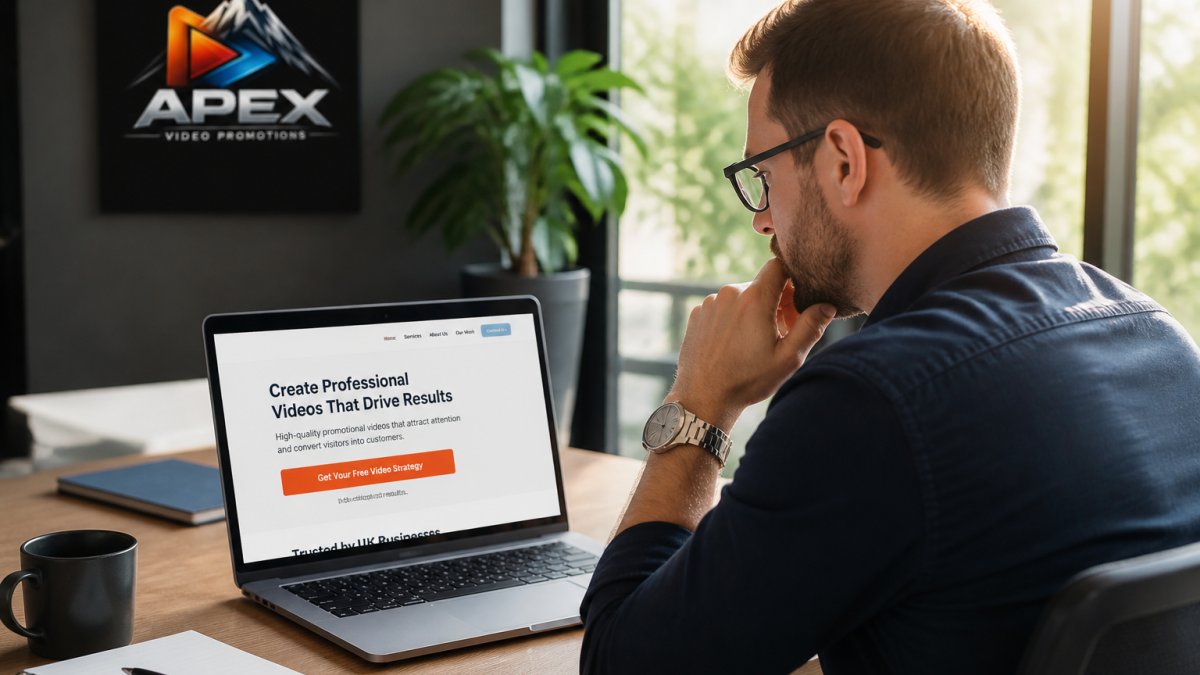
Website Landing Page Best Practices for Consultancy Services
A landing page is a single page designed to convert one specific visitor into one specific action. It's not your homepage. It's a focused page for a focused goal.
Focus on a Single Outcome
Every element on your landing page should push towards one outcome. If your goal is to book calls, everything points to the booking button. If it's email signups, everything points to the email field.
Remove navigation menus. Remove links to other pages. Remove anything that distracts from your goal. Visitors who leave your landing page rarely come back.
One headline. One subheading. One clear benefit. One call to action.
Use Video to Show, Not Tell
Video is the fastest way to attract attention and convert visitors into customers for brand consultancy. It works because visitors trust what they see more than what they read.
Show yourself on camera. Explain your approach. Answer the most common questions your prospects ask. Keep it short: 60 to 90 seconds is ideal.
Video does three things simultaneously: it builds trust, it demonstrates your expertise, and it keeps visitors on your page longer. Longer page time signals to search engines that your content matters.
You don't need expensive production. A clear phone camera, natural lighting, and a simple script work fine. The message matters more than the production quality. If you want to scale video content across your website without traditional filming, Website video that converts visitors can turn your existing copy and case studies into professional videos within 24 hours.
Consultancy Website Case Study Examples That Convert
Real examples prove your approach works. Case studies show specific problems, what you did, and measurable results.
A strong case study follows this structure:
- The client's situation and challenge
- Your approach and strategy
- The result with specific numbers
- A quote from the client
Include 2 to 3 case studies on your main pages. Different industries and company sizes. Visitors want to see someone like them.
Avoid vague results. "Increased sales" means nothing. "Increased monthly recurring revenue by 34 percent within 6 months" means everything.
The Role of Video Content in Attracting Attention
Video stops scrollers. It captures attention in ways text and static images cannot.
According to research from Wistia on video engagement, videos under 2 minutes hold viewer attention best. Consultancy videos should be shorter still: 60 to 90 seconds.
Video on your homepage increases time on site. Video on your landing page increases conversion rates. Video in your email increases click through rates.
Consultancies that use video convert more visitors. Video works.
You can create video content without traditional filming. AI powered video production lets you generate professional looking videos from your existing content: website copy, case studies, testimonials, service descriptions.
No filming days. No camera crews. No production delays. You provide the message. The video is built around it. Concepts can be delivered within 24 hours.
Measuring What Actually Works
You can't improve what you don't measure. Track these metrics:
- Traffic: How many people visit your site?
- Engagement: How long do they stay? Do they scroll?
- Conversion: How many take action (book a call, email, download)?
- Cost per lead: How much does each enquiry cost?
Set a baseline. Make one change. Measure again. Did conversion improve?
Common changes to test:
- Headline wording
- Call to action button text and colour
- Video vs. no video
- Page layout and section order
- Form fields and required information
Small improvements compound. A 10 percent increase in conversion rate is significant. It means more revenue from the same traffic.
Use Google Analytics to track visitor behaviour on your site. Set up conversion tracking. Know which pages and elements drive action.
Attracting attention and converting website visitors into customers for brand consultancy comes down to clarity, trust, and removing barriers to action. Show your process. Use video to demonstrate expertise. Make the next step obvious.
At Apex Video Promotions, we help consultancies create professional video content that converts. Video is the fastest way to build trust and keep visitors engaged. Our AI powered production process means you get professional results without traditional filming costs or delays. Book a consultation to see how video can improve your website conversions.
Frequently Asked Questions
How do you attract attention and convert website visitors into customers for a consultancy?
Attract attention through clear value propositions and compelling visuals, then convert by removing friction from your enquiry process. Use professional video content to demonstrate expertise, include specific case study results, and make your call to action obvious and low risk. Visitors convert when they understand what you offer, see proof it works, and can take the next step without uncertainty.
What should website calls to action examples include for consultancy services?
Effective CTAs for consultancy websites should be specific ('Book a free consultation' rather than 'Learn more'), low commitment ('No obligation' or 'Free initial review'), and benefit focused ('Discover how we increased revenue by 40%'). Place them above the fold, in case studies, and at the end of key sections. Test variations to find what resonates with your audience.
Why are consultancy website case study examples important for conversion?
Case studies provide social proof and demonstrate real results. They show prospects what success looks like, reduce perceived risk, and answer the question 'will this work for my business?' Effective case studies include the client's challenge, your specific approach, measurable outcomes, and ideally a client testimonial or quote.
What are the key website landing page best practices for consultancy services?
Focus each landing page on one core offer or outcome. Lead with a compelling headline that speaks to a specific pain point. Include social proof (testimonials, case studies, credentials), use video to build credibility quickly, and make your CTA prominent and low friction. Remove navigation menus that distract from conversion, and ensure mobile responsiveness throughout.